


Lucky Harbor Arcade
4.585.00 Reviews
App Specs
- Version
- 1.0.2
- Updated On
- License
- Free
- Downloads
- 10,000+
- Developer
- LEARN APPS
- Categories
- Casual
- Platform
- Android
Screenshots


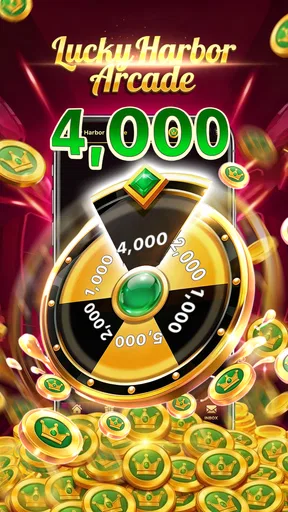
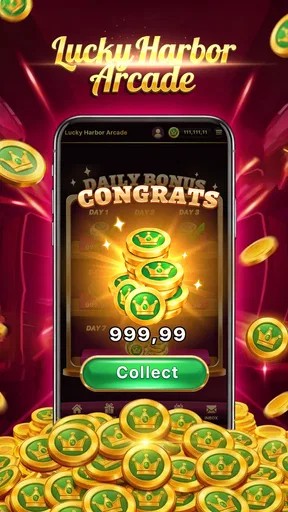
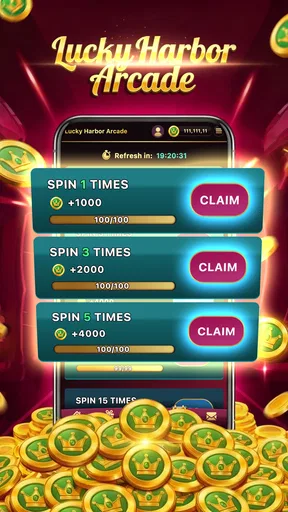
 Analysis by AppCompare
I opened Lucky Harbor Arcade expecting a quick casual distraction, and that is exactly where it makes the best first impression. The game presents itself as a harbor-themed collection built around slots, small games, and free daily rewards, so the appeal is immediate rather than complicated. I did not need a long tutorial or a large time commitment to understand the basic attraction: spin for a moment, try a mini-game, collect what is available, and leave when I am ready.
That simple loop matters more than it may sound. Many casual games ask for a few minutes and then quietly turn those minutes into a longer routine with missions, upgrades, timers, and several layers of menus. This one is easier to approach. It belongs to the casual game category, is free to download, and is suitable for Everyone, which makes it a natural choice for someone who wants light entertainment rather than a demanding game to master.
My overall reaction is positive, but it depends on knowing what kind of experience this is. This is a short-session arcade game, not a deep strategy title or a skill-heavy challenge. If you enjoy the familiar anticipation of slots and like having small activities around that central idea, the harbor setting gives the experience a pleasant identity. If you need constant novelty, precise control, or meaningful long-term progression, the appeal may fade sooner.
How Lucky Harbor Arcade feels in short sessions
I find the best way to judge a short-session game is to give each visit a small purpose, rather than keep tapping just because I have a spare moment. With Lucky Harbor Arcade, that might mean checking what is available, choosing one activity, and stopping when the break is over. That simple boundary makes it easier to notice whether the harbor’s mix still feels like a treat, which is a useful starting point before considering the habits that keep play comfortable.
The first few minutes are easy to understand
The strongest part of the game is its low entry barrier. The main concept is visible quickly, and the themed presentation helps the individual activities feel connected instead of appearing like unrelated mini-games placed in the same application. The harbor idea gives the game a relaxed backdrop, while the arcade format keeps the focus on quick interaction.
I especially like this kind of design when I have only a small break. During a coffee pause, while waiting for an appointment, or at the end of a busy day, I do not want to remember a complicated control scheme. Lucky Harbor Arcade works because its basic invitation is clear: open it, take a few turns, see what is available, and decide whether to continue. That clarity is more valuable than a large feature list for this particular audience.
The slot element also creates an immediate sense of anticipation. It is not the same as a game based on reflexes, where enjoyment depends on reacting correctly, and it does not require the concentration of a puzzle game with a difficult solution. The pleasure comes from the brief reveal and from seeing whether the next attempt produces a satisfying result. That makes the game approachable, although it also means that players who want their success to come mainly from personal skill may find the central loop limited.
Worth Reading Before You Choose

Flipboard Shows What News Apps Must Do Beyond the Feed

Switching to Android Auto Means Rethinking Your Driving Routine

Google Calendar Makes a Crowded Week Easier to Manage

Ludo King Makes the Most of the Minutes Between Plans

Baby Panda World Brings Quick Play to Modern Phones, but Its Game Library Feels Busy

ESPN’s Live Game View Makes Following Close Games Easier
A useful rhythm for a busy day
In my experience, the best way to play is in small visits rather than treating it like a long evening game. The structure naturally supports checking in, using the available opportunities, trying a mini-game, and closing the app. I would not recommend forcing a long session just to extract more entertainment from it. The game is more enjoyable when it remains a small break.
That rhythm also makes the daily rewards more relevant. A daily reward is most useful when it encourages a player to return without demanding a large daily task. Here, the idea fits the casual identity: a quick visit can feel worthwhile even when I do not have time for a full session. I would make a habit of checking the reward at a convenient moment rather than opening the game repeatedly throughout the day.
One practical tip is to separate “checking in” from “chasing a result.” I found the experience more relaxed when I treated the reward as a small bonus and the spins or mini-games as optional entertainment. Players who approach every session as a test they must win may become frustrated, because the game’s attraction is built around anticipation and repetition rather than guaranteed progress on every attempt.
Why the mini-games matter
The mini-games are important because they break up the main slot rhythm. Without them, the experience would depend almost entirely on whether the repeated spins continued to feel fresh. Moving between the central activity and a smaller diversion gives the session a little shape: I can try the main loop, switch focus, and then decide whether I have had enough.
That change of pace is particularly useful for players who enjoy casual games but dislike doing one identical action for too long. The mini-games do not need to become a separate major adventure to serve a purpose. Their value is in giving the player a reason to look around the harbor rather than staying on one screen until the novelty disappears.
My advice is to use them as palate cleansers, not as obligations. If a player tries to optimize every available activity, a relaxing game can start to feel like a checklist. The better workflow is to begin with whichever option looks appealing, switch when the repetition becomes noticeable, and stop before the session turns into routine maintenance.
Interruption tolerance is one of its real strengths
Lucky Harbor Arcade suits interrupted play better than many games in the same broad casual space. A player can approach it with the expectation that a session may end suddenly because a message arrives, a bus comes, or work resumes. Since the game is built around compact activities, it does not demand the uninterrupted attention associated with a long level, a team match, or a story scene.
This makes it a good companion for waiting rooms and short commutes, although I would still avoid starting a session when I need to be completely focused elsewhere. The game is easy to put down, but the temptation to take “one more” turn can still exist because the slot loop is designed around anticipation. That is not a technical complaint; it is simply part of the kind of entertainment the game offers.
A realistic everyday use would be a ten-minute break between errands. I could open the game, collect the daily reward, play a few rounds, try a mini-game, and close it without feeling that I had abandoned a larger objective. If I were playing a competitive match or a story-driven title, that same interruption would be much more disruptive. Lucky Harbor Arcade earns its place here by keeping the cost of stopping low.
Returning later feels natural, but not endlessly urgent
The return loop is based on the appeal of coming back for another brief visit rather than on a large narrative cliffhanger. That is a sensible fit for a casual harbor arcade. I can imagine opening it again the next day because the previous visit was pleasant, not because I need to remember a complicated plot or recover from a major setback.
At the same time, players should keep their expectations realistic. Daily rewards can create a reason to return, but they do not automatically provide deep replay value. The long-term question is whether the combination of themed slots and mini-games remains enjoyable after the initial discovery period. For me, the answer depends on how much I enjoy chance-based repetition. Someone who likes collecting small rewards and revisiting familiar activities may stay interested longer than someone who needs new mechanics every session.
I would also recommend deciding in advance how often you want to check in. If the game becomes an automatic reflex, the relaxing quality can give way to habit. Using it at specific moments—during a break or after finishing a task—keeps the experience under your control and makes the short sessions feel more intentional.
The trade-off between comfort and depth
The same simplicity that makes the game welcoming also limits its depth. There is no need to learn a complex system before enjoying it, but there is also less reason to study the game carefully. The slot-centered design creates excitement through possibility rather than through a detailed mastery curve. That is a strength for casual players and a weakness for anyone looking for a game where improved technique consistently produces better results.
This is where Lucky Harbor Arcade differs from ordinary puzzle games. A puzzle title usually rewards planning, pattern recognition, or experimentation. Here, the player’s satisfaction is more immediate and less dependent on solving something. Compared with a competitive arcade game, it is calmer and more forgiving, but it also offers less intensity. Compared with a large collection of mini-games, its harbor theme gives it more unity, though the individual activities may not provide the same variety as a dedicated party-style collection.
That comparison helped me place the game properly. I would choose it over a demanding puzzle when I want my mind to rest. I would choose a puzzle or skill-based arcade game instead when I want to feel that every successful outcome came from a decision I made. Neither option is universally better; they serve different moods.
What the developer’s presentation gets right
LEARN APPS has positioned this release as a friendly, accessible game rather than an intimidating gambling-style simulation or a complicated management project. The harbor setting, casual classification, and Everyone age rating all point toward an experience meant to be approachable. That consistency matters because the tone of a game can be just as important as its mechanics when the goal is relaxation.
The current version is 1.0.2, and the game is available for devices running Android 7.0 or later. Those details make it accessible to people using older supported Android devices, although actual comfort will still depend on the phone or tablet’s screen, performance, and available space. I would check compatibility before planning to use it on an older device, especially if the device already struggles with other games.
The game has reached over ten thousand installs and holds a 4.5 average from around two hundred ratings, with roughly eighty-five written reviews. Those figures suggest that it has found an audience, but I would not treat them as a guarantee that every player will enjoy the same parts. A strong average can tell me that the basic concept works for many people; it cannot replace my own judgment about whether a slot-and-mini-game loop matches my taste.
Where the repetition becomes noticeable
The biggest limitation is also the most predictable one: repeated spins can lose their impact. At first, the brief anticipation is enough to carry the session. Later, I may notice that I am performing the same type of action because I am hoping the next result will feel different. The mini-games help, but they do not completely change the foundation of the experience.
This is not a reason to dismiss the game. Repetition is often the point of a casual comfort game. Familiar actions can be relaxing, especially when I do not want to learn anything new. The issue is whether the player expects variety or depth. If you already know that you enjoy slots and short arcade diversions, the repetition may feel soothing. If you usually stop playing once you understand the central loop, you may reach the limit quickly.
A useful way to avoid fatigue is to play in defined bursts. Rather than leaving the game open and continuing without a clear stopping point, I would set a simple boundary: one visit during a break, one reward check, or a short rotation between the main activity and a mini-game. This does not change the game itself, but it improves the way the loop fits into daily life.
Who should install it—and who should skip it
I would recommend Lucky Harbor Arcade to someone who wants a free casual game for brief, low-pressure sessions. It is a good match for players who enjoy themed slot-style entertainment, appreciate daily rewards, and like having mini-games available when the main loop starts to feel repetitive. It also suits people who need a game that can be paused mentally and physically without losing a long chain of progress.
I would be more cautious about recommending it to players who dislike chance-driven outcomes. If you want every result to reflect timing, planning, or precise control, the central appeal may not be satisfying. I would also point puzzle fans toward a dedicated puzzle game when they want a stronger sense of problem-solving, and I would point competitive players toward a multiplayer arcade option when they want pressure, ranking, or direct opposition.
Parents may appreciate that the listed content rating is Everyone, but the rating alone should not determine whether the game suits a particular child. I would still look at how the individual player responds to repeated reward loops and decide whether that style of play fits the household’s expectations. For adults, the same consideration applies: free access makes it easy to try, but “free” does not mean the game will be equally valuable to every playing style.
My practical routine for getting the most from it
If I were introducing the game to a friend, I would suggest a simple routine. First, open it when you genuinely have a short pause rather than using it to avoid a task. Next, collect the daily reward if it is available, then sample the main slot activity and one mini-game. Finally, stop as soon as the session begins to feel automatic instead of enjoyable.
This approach highlights the game’s best qualities: immediate access, a gentle theme, and low commitment. It also protects against its main weakness, which is the possibility that repeated actions begin to blur together. I would not approach it as a title that must occupy a large portion of the day. Its value is closer to a small digital break that happens to have a harbor arcade setting.
Another useful habit is to judge the game over several separate visits instead of one long test. A long first session can make almost any reward-based game feel exciting, while a short return visit reveals whether the loop still works when the novelty has settled. If you enjoy coming back without needing a major new objective, that is a sign the game fits your habits. If you feel you have already seen everything that interests you, that is equally useful information.
The casual verdict
After spending time with it, I see Lucky Harbor Arcade as a pleasant, focused option for players who want quick entertainment without a demanding learning curve. Its best qualities are the clear opening hook, the easy session rhythm, and the fact that interruptions do not undermine the entire experience. The themed slots and mini-games give the short visits enough structure to feel like more than a single repeated tap.
Its weaknesses are tied to the same design. The game does not need complexity to deliver its purpose, but players who seek deep progression or constant novelty may find the repetition too apparent. The daily rewards encourage return visits, yet the lasting appeal will depend heavily on whether the player enjoys the underlying chance-based loop. That is a meaningful trade-off, not something I would hide behind general praise.
For me, the deciding question is simple: do you want a calm, free arcade break that you can enter and leave easily? If yes, this game is worth trying, especially because its casual format and Everyone rating make it approachable. If you want a game built around mastery, story, or competitive tension, I would choose another category instead. Lucky Harbor Arcade works best when you let it remain small, relaxing, and easy to put down.
Pros
- Quick arcade sessions are ideal for short breaks.
- Simple controls make the game easy to pick up.
- Bright visuals give the gameplay a cheerful style.
- Varied challenges help keep repeated runs engaging.
- Offline play is useful when no internet connection is available.
Cons
- Progress may feel repetitive after extended play.
- Some levels can become difficult without upgrades or practice.
- Ads may interrupt gameplay between sessions.
- The interface can feel crowded on smaller phone screens.
- Limited depth may disappoint players seeking a long-term arcade experience.
FAQs for Lucky Harbor Arcade
What is Lucky Harbor Arcade?
Lucky Harbor Arcade is an arcade-style mobile game built around quick, casual play sessions and a colorful harbor-themed presentation. Players can expect simple gameplay, score-based challenges, and a progression system designed to encourage repeated attempts. Its appeal is mainly for users who enjoy lightweight entertainment rather than a deep story or complex strategy experience. Before downloading, check the store listing to confirm the current supported devices and version.
Is Lucky Harbor Arcade free to download and play?
Lucky Harbor Arcade may be available as a free download, but the exact monetization model can vary by platform and region. Free games commonly include advertising, optional in-app purchases, or both. It is worth reviewing the Google Play or App Store listing before installing, especially if the device will be used by children. Also check whether purchases are optional enhancements or connected to progression and gameplay convenience.
Does Lucky Harbor Arcade require an internet connection?
The internet requirements for Lucky Harbor Arcade can depend on the feature being used and the version installed. Basic arcade gameplay may work offline in some releases, while advertisements, cloud saves, updates, leaderboards, or promotional content may require a connection. If offline access is important, test the game after installation with Wi-Fi and mobile data disabled, and avoid assuming that every feature will remain available without internet.
Is Lucky Harbor Arcade suitable for children?
Lucky Harbor Arcade may be appropriate for players who enjoy simple arcade entertainment, but parents should review its official age rating, advertising practices, and in-app purchase options before allowing children to play. The rating can differ between Android and iOS. If the game displays ads or offers purchases, parental controls and purchase authentication should be enabled to prevent accidental spending and limit exposure to unsuitable promotional content.
What devices are compatible with Lucky Harbor Arcade?
Compatibility depends on the operating system, device model, available storage, and the minimum software version required by the current release. Older phones or tablets may experience slower performance, longer loading times, or limited access to newer features. Before downloading Lucky Harbor Arcade, open the official store page on your device and verify the listed requirements, recent update date, permissions, and whether the application is officially supported in your region.


